

A sudden increase in calls can turn a well-run customer support operation into a queue-management problem. Festive sales, payment deadlines, admissions, seasonal demand and service updates can push call volumes beyond what a fixed human team can comfortably handle.
AI voice agents address this problem by handling inbound and outbound conversations automatically, staying available 24/7 and handing calls to human teams when needed. Instead of staffing for the busiest possible day, businesses can build a support layer that absorbs changing demand.
This article explains why call-volume crises happen, how AI voice agents respond, what controls businesses should expect and what to evaluate before choosing a platform.
The core concept is elastic call handling.
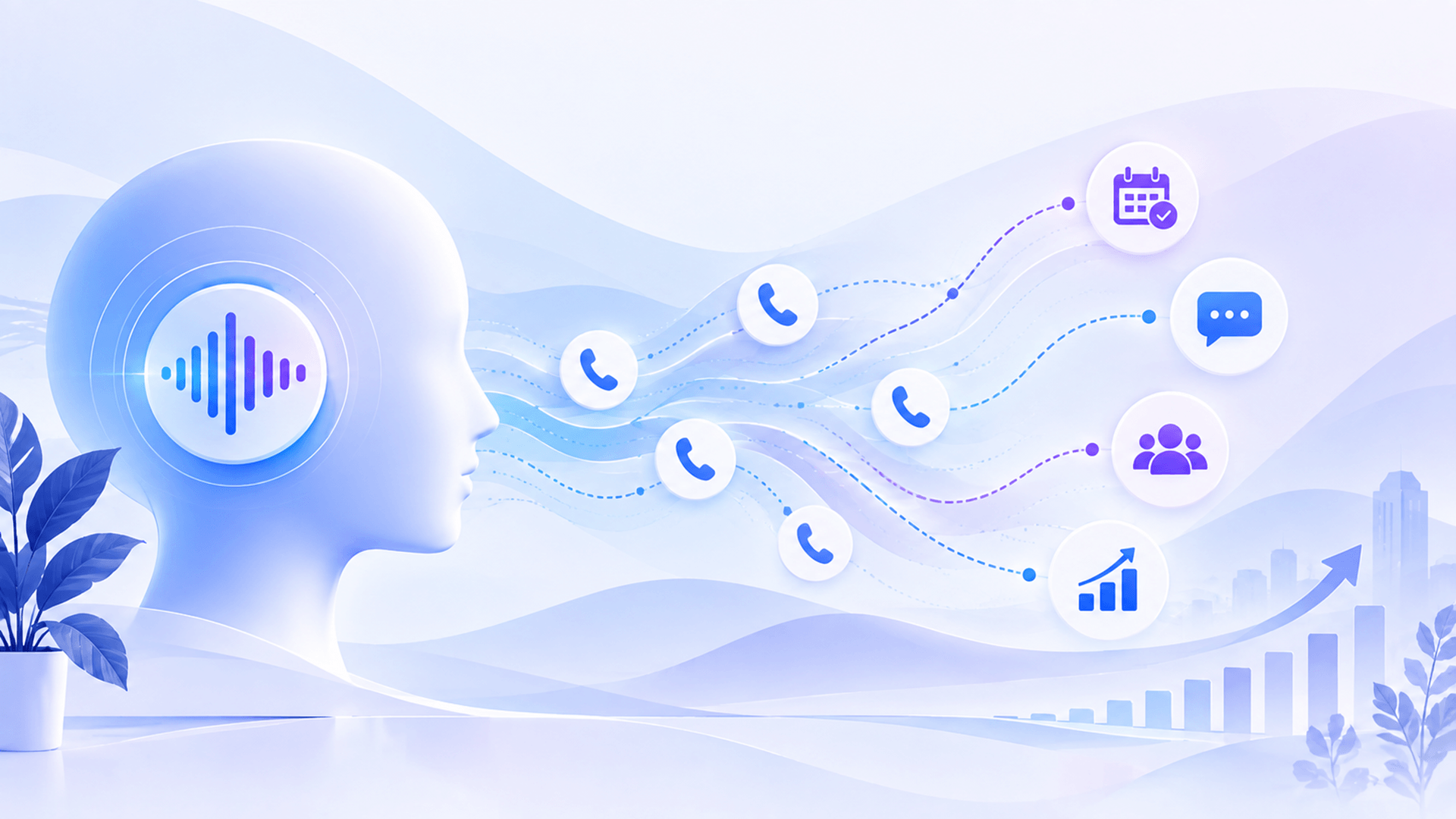
Elastic call handling means your customer communication capacity can respond to changing demand instead of depending entirely on a fixed number of available support representatives. When routine call volume rises, an AI voice agent can handle supported conversations while human teams remain available for situations that require them.
The important point is not simply automation. It is where the extra demand goes. Instead of every additional caller joining the same human queue, suitable conversations can be answered by the AI layer, completed automatically or handed to the appropriate team.
That principle runs through every peak-demand use case: absorb repetitive demand first, preserve human capacity for the conversations that need it.
Why does the traditional support approach break during call spikes?
Most customer support teams plan staffing around expected demand. The problem starts when thousands of customer actions are concentrated into a short period or when a predictable event creates unusually high call demand.
Indian businesses encounter several common triggers.
During Diwali, regional festivals and major online sales, e-commerce businesses can receive concentrated queries about orders, availability, delivery and customer support.
The same campaign that increases sales can therefore create extra pressure on the support operation.
Fintech and BFSI operations can face periods when many customers need payment information, reminders or account-related assistance around similar dates.
Outbound follow-ups can also add to the workload if teams must work through large contact lists manually.
Education providers can receive repeated questions about admissions, appointments and other student enquiries when results are announced or admission deadlines approach.
The demand is time-sensitive. A response that arrives after the decision window may no longer be useful to the caller.
Agricultural communication follows seasonal patterns. Crop cycles, changing seasonal requirements and government scheme announcements can create concentrated periods when farmers need information or follow-up.
Regional language support becomes particularly important because the callers may prefer to communicate in their everyday language.
When a government programme or service becomes available, large numbers of citizens may need information at approximately the same time.
A fixed support team can quickly become a bottleneck when the same basic questions arrive repeatedly.
The common problem is simple: demand changes faster than traditional staffing capacity can change.
How does the traditional method compare with an AI voice agent?
The scaling model is the key difference. Traditional support primarily scales by adding people and shifts. AI voice agents create an additional automated layer for suitable conversations, allowing businesses to handle repetitive demand without making every increase in call volume a staffing problem.
Consider an e-commerce company running a major festive campaign.
Marketing activity increases orders, but the support team also starts receiving more calls. Customers want help, information or updates, and the existing team must deal with the sudden increase while continuing its normal work.
Here is how an AI-supported model can operate.
Instead of relying only on an available human representative, the AI calling agent can answer the incoming call.
The conversation can take place in a supported language. This matters in India because customers may be more comfortable discussing their issue in Hindi, Marathi, Gujarati, Tamil, Telugu, Kannada or another supported language.
If the conversation falls within the workflow configured for the AI agent, it can continue handling the interaction rather than automatically adding the caller to a human queue.
Not every conversation should remain automated. When a caller needs the appropriate human department, the system can route the call instead of forcing the AI to handle something outside its intended role.
After the call, the business receives a summary containing the outcome and next action. This gives the support team context without requiring someone to reconstruct the entire conversation manually.
The AI environment can connect with business tools such as CRM systems. With the right integration, the conversation can become part of the wider customer workflow rather than an isolated phone interaction.
For an e-commerce operation, this changes the role of peak-demand planning. The question moves from “How many additional representatives will we need if calls increase?” toward “Which conversations can the AI layer handle, and which should reach our support team?”
Automating calls does not mean removing operational control. A decision-stage buyer should look closely at how the platform fits around existing support processes.
AI should not become a barrier between the customer and the right person.
Valuez AI supports human handoff and can route callers to the appropriate department. This allows businesses to define a practical division between conversations handled by the AI voice agent and those that need human involvement.
A completed call should produce information that the rest of the business can use.
Valuez AI provides post-call summaries that capture the outcome and next action. This helps support teams understand what happened before they continue a customer interaction or follow-up.
Call automation becomes more useful when it connects with the systems the team already uses.
Valuez AI can connect with CRMs and other tools, including Zoho CRM, WhatsApp, Zapier, webhooks and REST API. Businesses evaluating implementation should map the complete flow from incoming conversation to CRM record, follow-up or human action.
Enterprises may have different infrastructure and data requirements.
Valuez AI supports cloud, private cloud and on-premises deployment. Buyers can therefore evaluate deployment alongside their internal security, infrastructure and operational requirements rather than treating deployment as an afterthought.
Valuez AI applies elastic call handling through AI-first voice automation with human handoff. Its Conversational AI / AI Calling Agent supports inbound and outbound calling, while Sarvani supports telecalling workflows such as contact-list follow-ups.
The platform also includes Text-to-Speech, Speech-to-Text and Speech-to-Speech, alongside Appointment Booking and an AI-Powered CRM. Businesses can connect the platform with Zoho CRM, WhatsApp, Zapier, webhooks and REST API.
For Indian operations, language coverage is especially relevant. Valuez AI supports 9+ languages, including Hindi, English, Marathi, Sanskrit, Ahirani, Gujarati, Punjabi, Tamil, Telugu and Kannada. This allows businesses to design customer conversations around the languages their audiences actually use.
Valuez AI can operate across phone and web 24/7, with cloud, private-cloud and on-premises deployment options. Its average integration timeline is under 48 hours.
Where do AI voice agents matter most during demand spikes?
Festive campaigns and promotional periods can generate concentrated customer-support demand. AI voice agents can provide another handling layer when inbound conversations rise rather than sending every supported query into the same human queue.
Payment cycles, EMI dates and customer follow-ups can create both inbound and outbound calling pressure. AI calling agents can handle supported conversations and contact-list follow-ups while preserving human involvement where required.
Seasonal crop cycles, monsoon periods and scheme-related communication can create time-sensitive calling requirements. Multilingual voice support is particularly useful when farmers prefer information in regional languages.
Admission windows and result periods can concentrate large numbers of enquiries into a relatively short period. AI voice agents can help handle supported conversations while appointment booking can move suitable enquiries directly to the next step.
Property campaigns can generate bursts of enquiries that need timely responses and follow-up. Voice agents can answer calls, support appointment booking and route appropriate conversations to the relevant team.
Government scheme launches can produce large numbers of similar citizen enquiries while also introducing significant language diversity. Multilingual AI voice agents provide an automated layer for supported conversations while human handoff remains available.
Peak-call capacity alone should not decide the purchase. Buyers should test the complete customer experience and operational fit.
Use this checklist during evaluation:
A useful evaluation should therefore test more than whether the AI can answer a phone call. It should establish whether the entire journey from the customer's first words through automation, handoff, summary and follow-up works for your support operation.
AI voice agents change peak-demand planning by adding an elastic call-handling layer between rising demand and a fixed customer-support team. Supported conversations can be handled automatically, callers can be routed to the right department, follow-ups can continue, and human teams remain available when their involvement is needed.
For Indian businesses, multilingual support also makes that model relevant across regions and customer groups. Instead of planning every operation around the maximum possible call load, teams can decide which conversations should be automated and which should remain human-led.
To see how that model could fit your support operation, book a Valuez AI demo and test it against your actual call workflow.
 1.png)
We're building something powerful for you. This feature will be available shortly.